The Right Dose of the Right Exercise at the Right Time.

“I’m a big believer that we should try to adjust our lifestyle while we’re still healthy.”
Source: Michael Snyder, Professor of Genetics at Stanford University, Massive biomolecular shifts occur in our 40s and 60s, Stanford Medicine researchers find.
Our bodies are not static — they continue to change throughout life in response to everything from activity levels and nutrition to inflammation, stress and the environments we live in. One of the most profound changes that accompanies ageing is the gradual loss of lean muscle mass and strength (sarcopenia). This isn’t just about looking or feeling strong — it directly affects how well we move, how independently we live, and how resilient we are when illness or injury strikes. Prioritising muscle strength now means giving yourself a far stronger foundation for the years ahead – so if you do become sick, face surgery, or injury, your body has the reserve it needs to heal, adapt and recover more effectively.
But the story goes deeper than muscle tissue alone. Emerging research highlights intriguing links between strength, the gut‑muscle axis and the biological processes of ageing. Studies show that the microbiome – thetrillions of microbes in our gut – plays a role in maintaining muscle mass and function; when gut diversity shifts with age, it can influence inflammation, nutrient absorption and even muscle performance. In other words, what’s happening inside your gut can help or hinder how well your muscles respond to exercise and ageing.
At a cellular level, scientists are uncovering how cellular senescence (accumulation of “zombie” cells that no longer function but secrete inflammatory factors) increases in aged tissue and contributes to weakness and reduced regenerative capacity, leaving us susceptible to chronic conditions and decline.
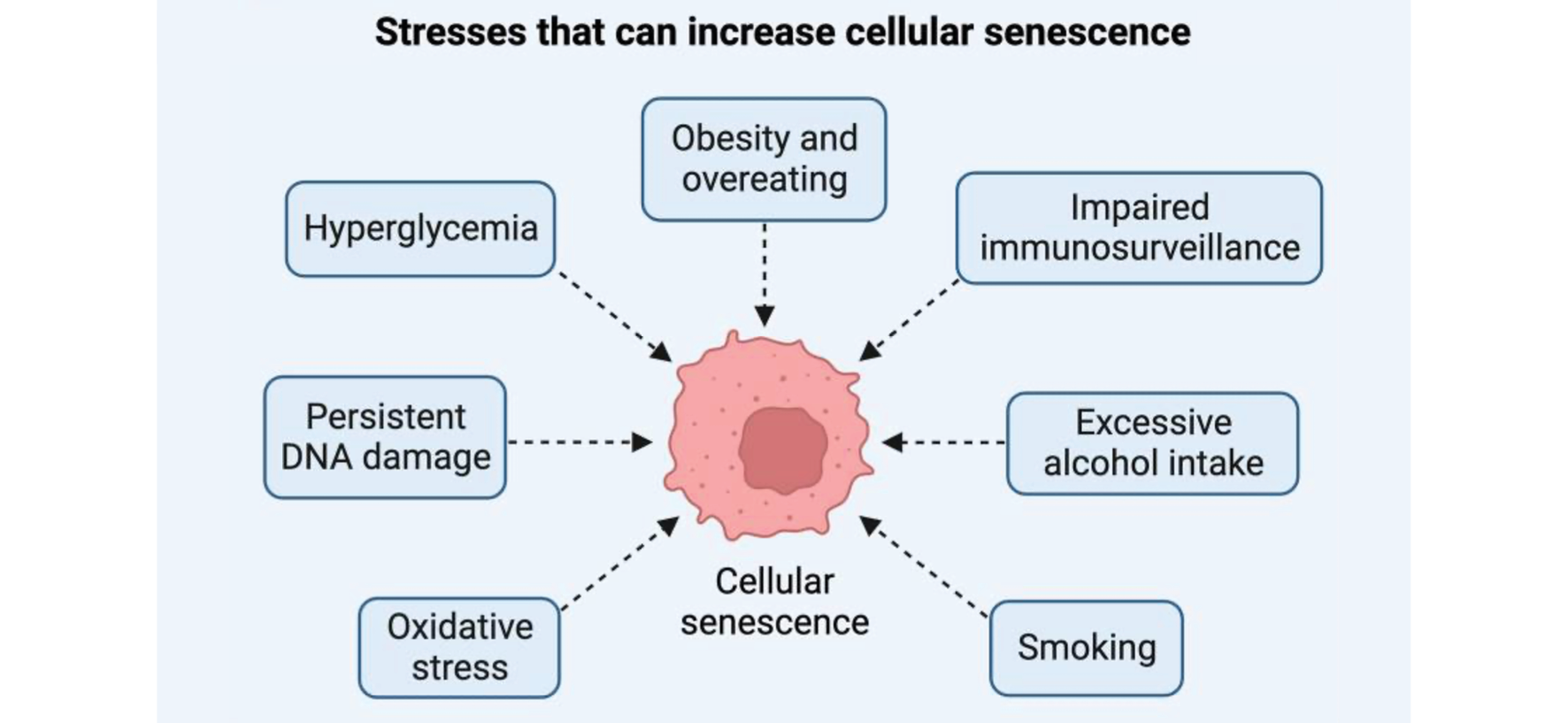
Stresses that can increase cellular senescence.
Senescent cells accumulate in skeletal muscle with age, driving inflammation and impairing tissue function, but interventions that preserve muscle health — including regular strength training — are among the best lifestyle tools we have to maintain tissue quality and counteract age‑related decline.
Together, this body of evidence shows that prioritising muscle strength and health isn’t just about today’s fitness — it’s about supporting your body’s internal systems, bolstering your resilience to ageing processes, and setting the foundation for a longer, healthier life.
If you would like to learn more about developing muscle and strength, register for the launch of our Learn to Lift eBook (date tbc) which explores the why and how of resistance training. At the launch Katie Stewart will give a one-off presentation Muscle Mass: The Magic Anti-Aging Pill.
Email anastasia@chroniccare.com.au to express your interest in attending the launch.